
Forever Fortuny
Magician of Venice

Think before Pleats Please by Issey Miyake, way before that. I present you the inventeur of the modern plissé.
Mariano Fortuny y Madrazo was born in Granada, Spain, in 1871 . His family moved to Venice in 1889, where he remained until his death in 1949. Fortuny created some of the most beautiful garments and textiles of the twentieth century. The clothing he designed ignored the constant change dictated by the whims of fashion. His most famous creation and characteristic is the Delphos style, which he patented in 1909; a simple dress of finely pleated silk.
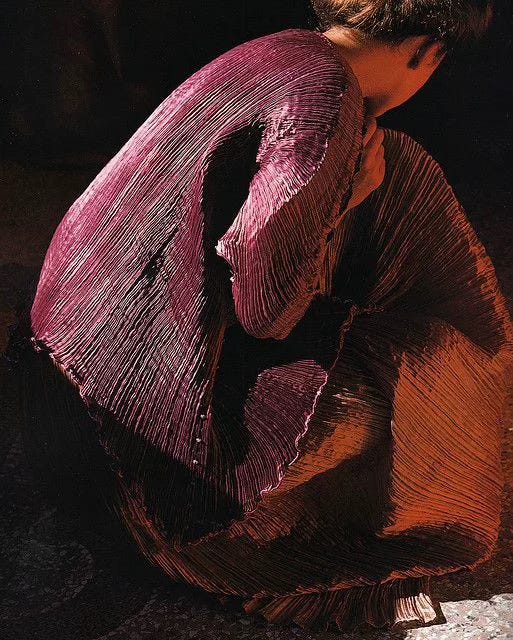

Fortuny began his artistic life as a painter; it was not until 1906 that he started working with dress and textile designs. Paul Poiret was the first Parisian couturier to design ‘Directoire’ style dresses to be worn without corsets in 1908. Fortuny took off from Poiret, developing a new concept of dress, a style from which he never deviated during the entire forty years of his working life.
He was inspired by ancient Venice, Greece, Egypt, Florence, Persia, Asia, South America, and the Far East. Transforming historic source material into distinctively modern expressions. The silk dresses that he designed were perhaps most remarkable for their subtle colouring and for the freedom of movement that they allowed. Some of these dresses were simple in execution, while others of similar design had hundreds of tiny pleats that ran from neck to foot.
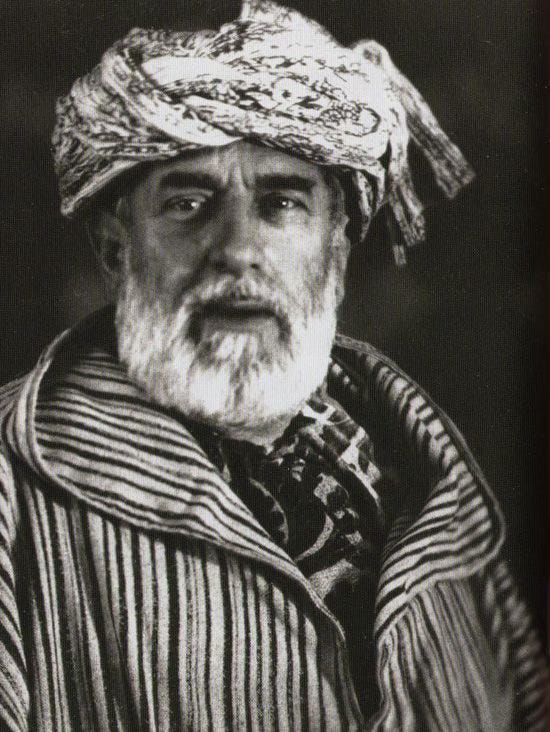
In 1906 , the iconic Knossos, a lushly printed silk scarf, swirled across the Parisian fashion scene for the first time, after being worn by dancers at a ballet.
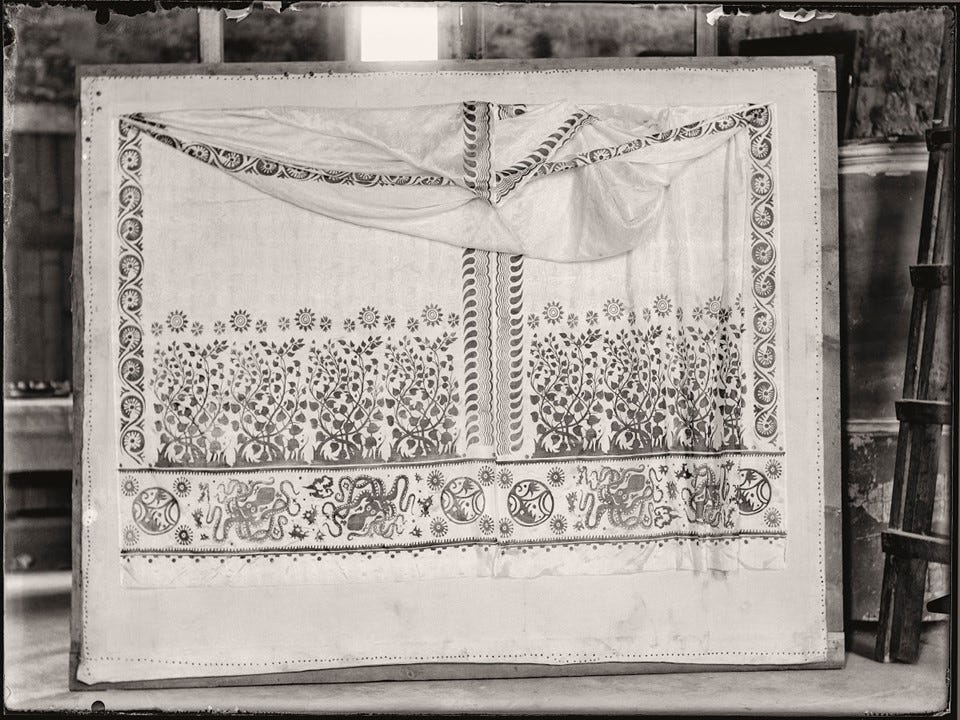
The iconic Knossos Veil emerged as Mariano and Henriette Fortuny’s inaugural foray into the world of textile and clothing design, marking a pivotal moment in their career, and establishing their reputation as masters of their craft. This creation, inspired by the ancient Greek himation, was a substantial piece of printed silk taffeta, measuring an impressive 450 cm in length and 110 cm in width. Its design showcased an extraordinary commitment to craftsmanship, experimentation, and innovation, featuring motifs that spanned early-Corinthian, Minoan, and Archaic Greek influences, including papyrus flowers, heart-shaped palms, stylized flora, octapus and argonaut designs. These patterns, indicative of Fortuny’s fascination with ancient civilizations, were meticulously derived from Minoan fresco and vase painting, encapsulating a blend of historical reverence and artistic ingenuity.
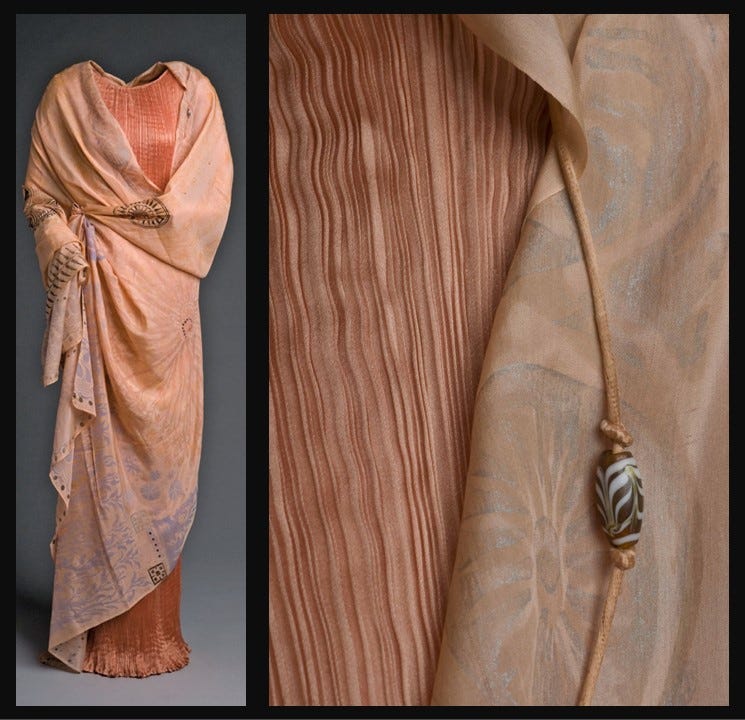
The Delphos dress was described in its patent of 1909 as ‘a type of garment derived from the classical robe, but its design is so shaped and arranged that it can be worn and adjusted with ease and comfort’. The Delphos derived its name from the well known bronze of the Delphic charioteer (475—470 B.C.), whose long, short-sleeved robe hung in loose folds.
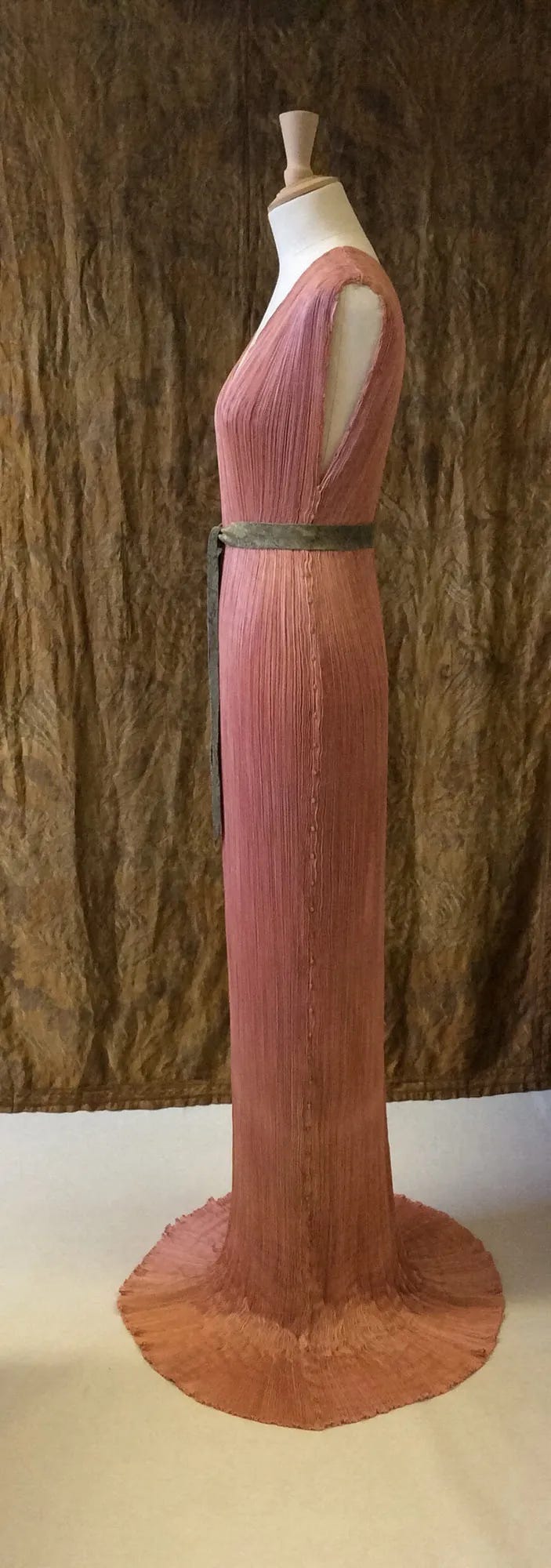
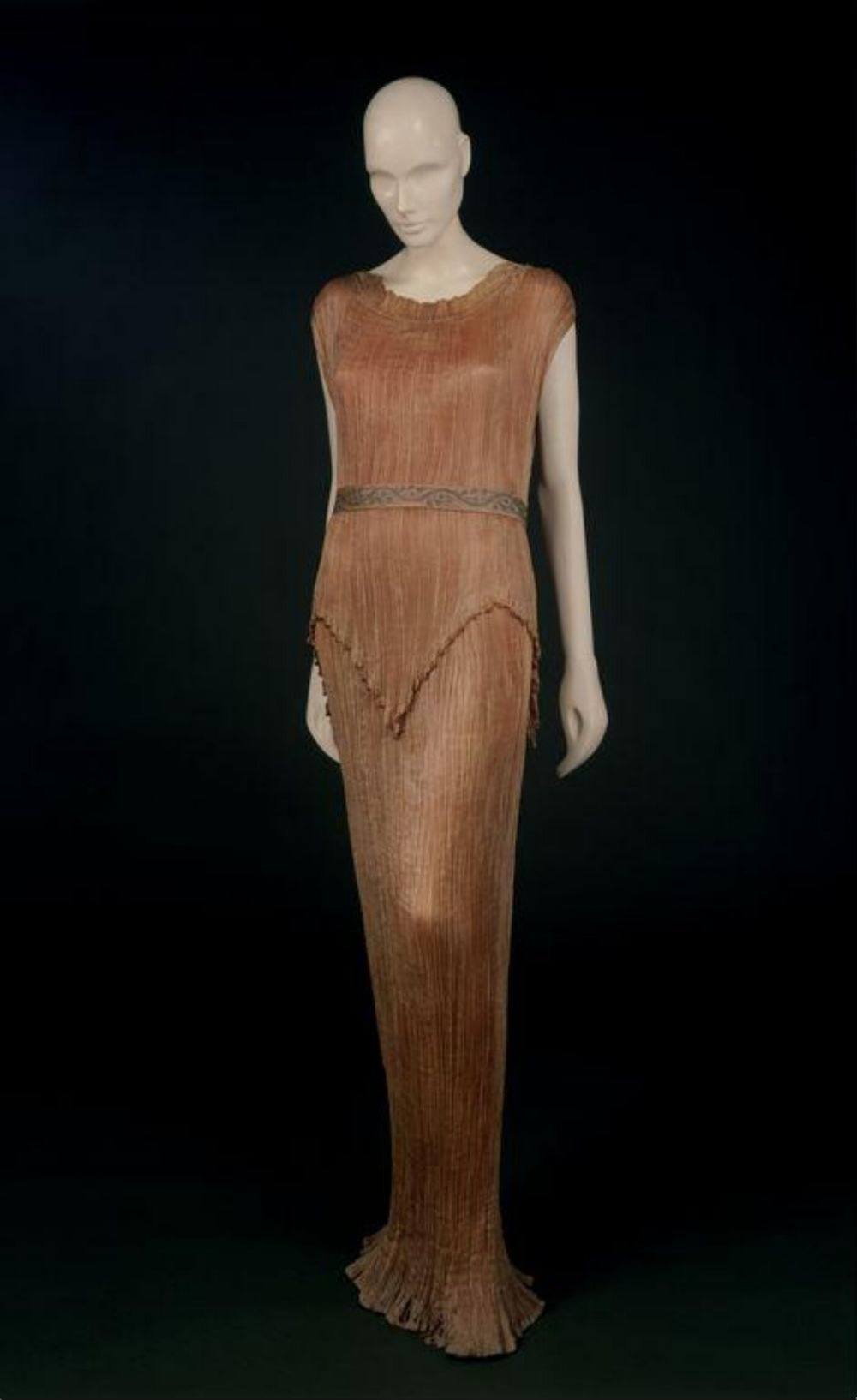
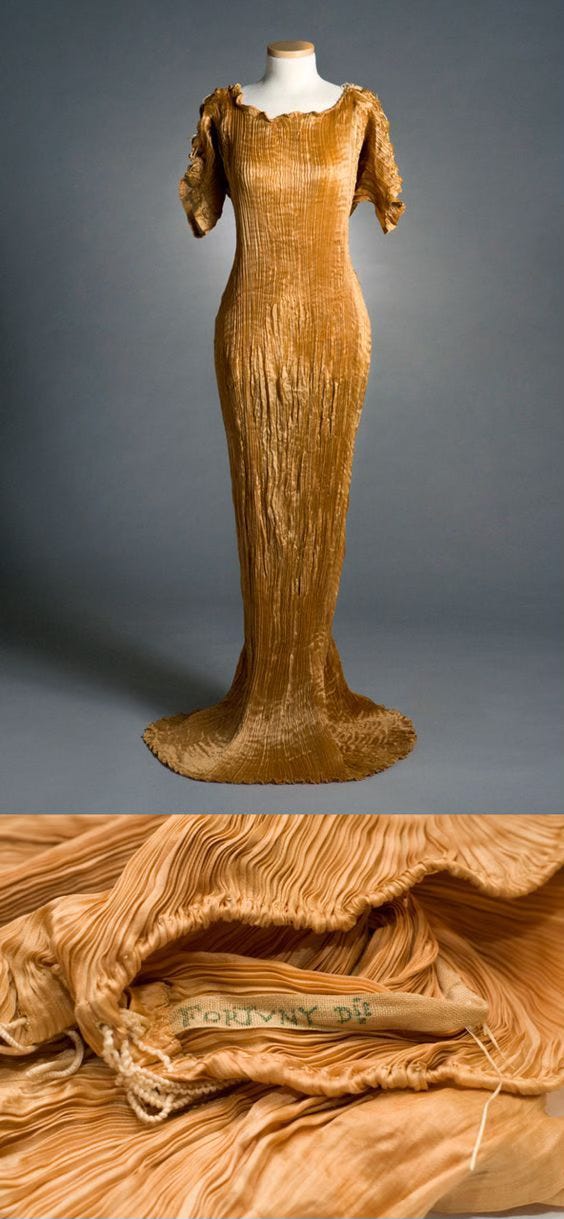
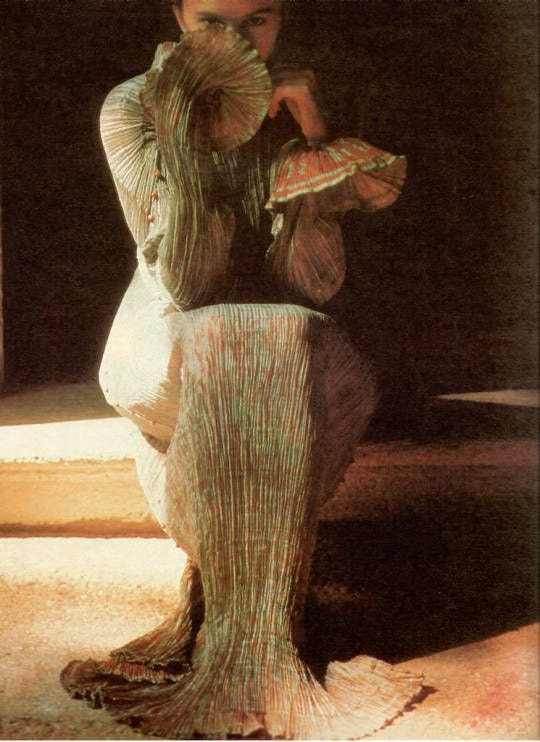
The construction was simple; four pieces of pre-pleated silk handsewn together into a cylindrical shape, threaded through the neckline and sleeves with a drawstring and weighted with Venetian glass beads. The pleated silk undulated horizontally and was dyed by hand to create shimmering colours.
The Delphos could be worn alone or with an overgarment without loss of aesthetic appeal. It was originally worn as a teagown with few undergarments, often with a velvet jacket or tunic, and by the 1920s Fortuny dresses became more popular as fashion styles relaxed. Many women chose then to wear one when sitting for a photographer or painter. It was not until the 1930s that women in America started wearing them to the theatres and restaurants as well as at home.
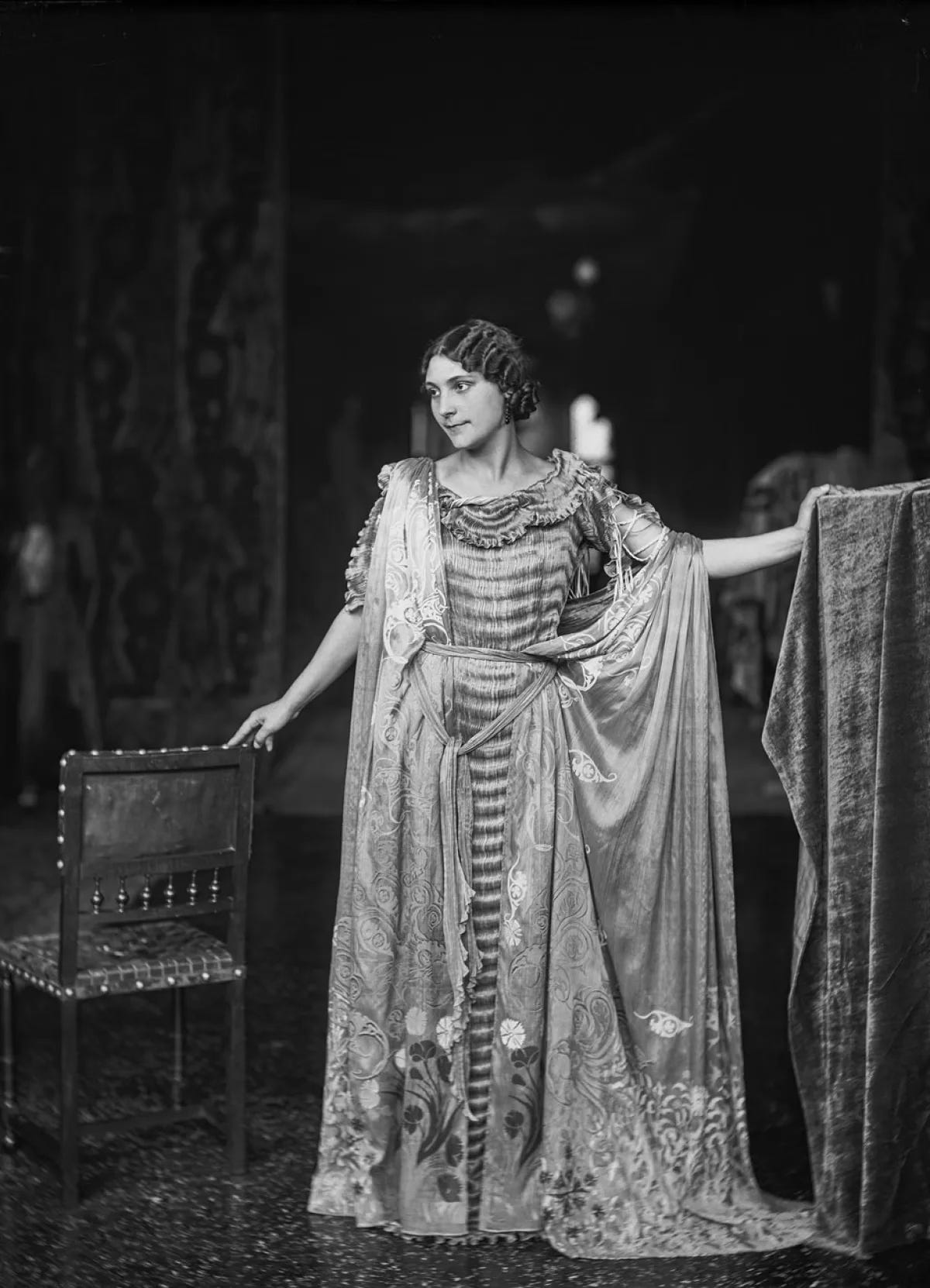
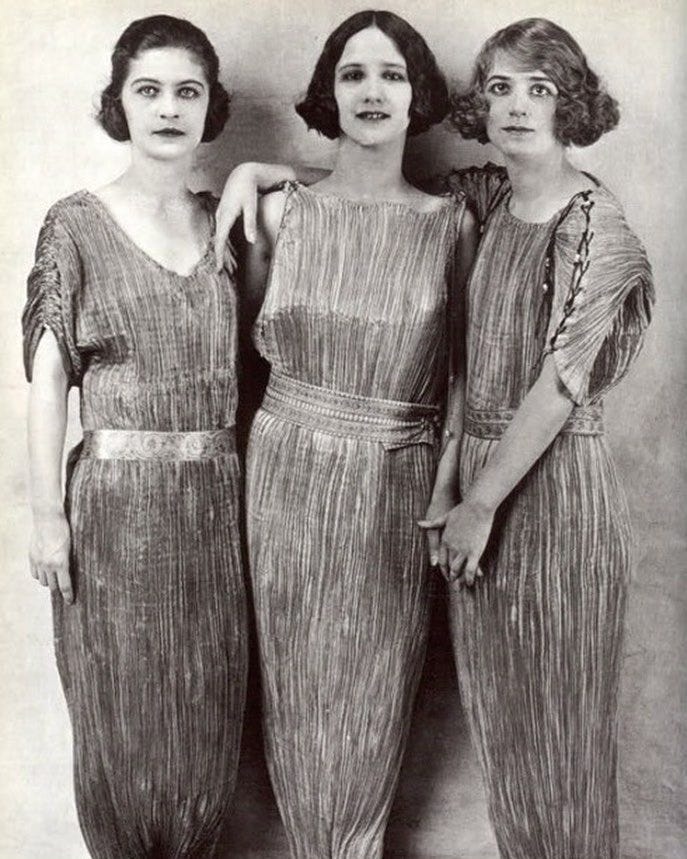
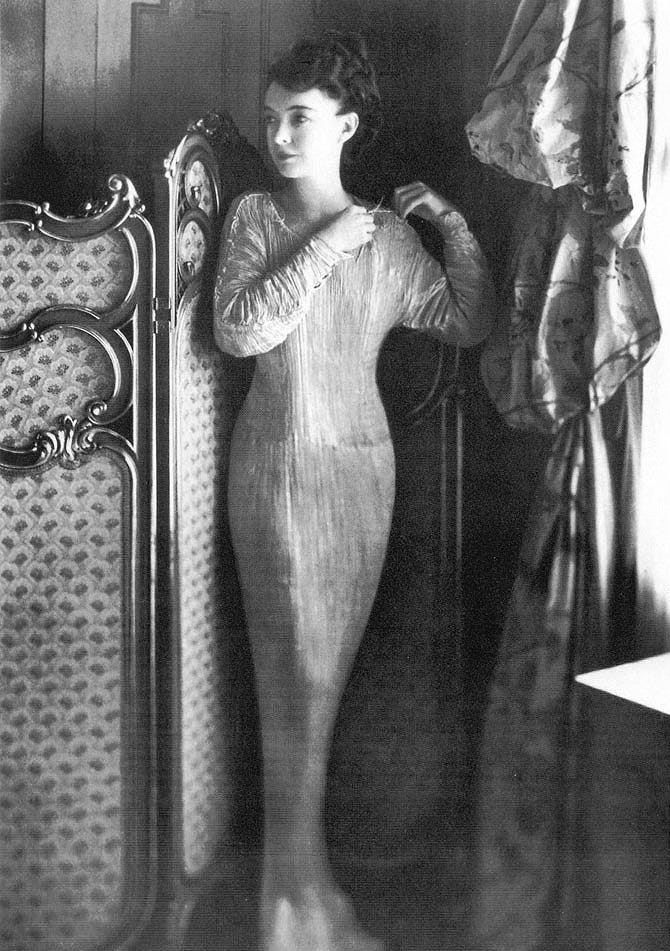
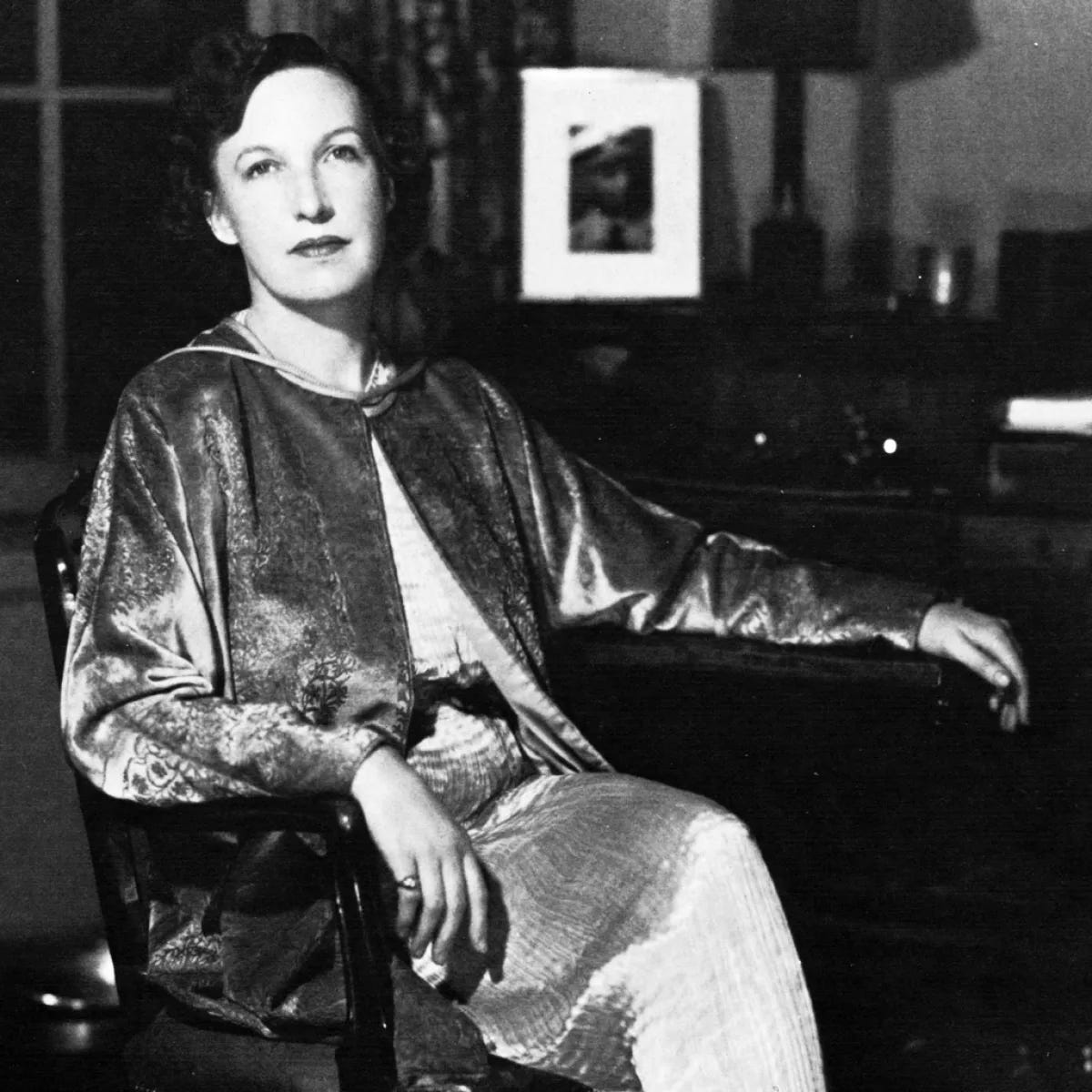

Fortuny possessed a rare understanding of textiles and was interested in techniques of their manufacture and use. From his studio in Venice, at the Palazzo Orfei, he not only designed clothing but invented the processes of manufacture associated with the textiles for them. Each garment was made by hand as were the materials used in it. Fortuny worked mainly with silk and velvet which he received in a raw state.
He created his own formulations of dyes and pigments based on ancient techniques of the masters, giving his materials an aura of authentic antiquity. Incredibly durable with an otherworldly essence, his pieces were so mystifying that rumors of sorcery and magic abounded and Fortuny came to be known as the “magician of Venice.”
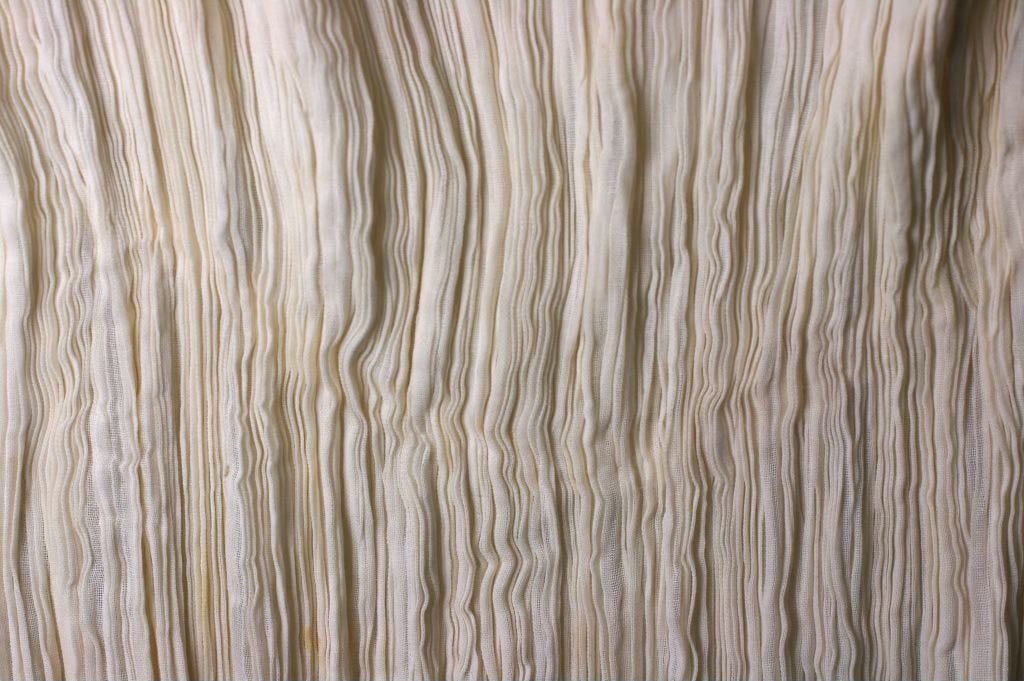
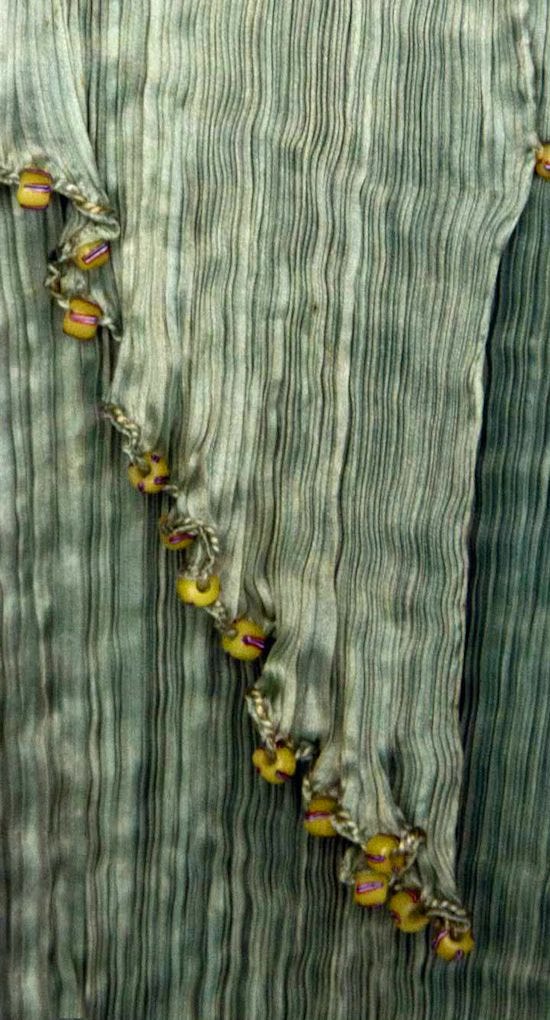
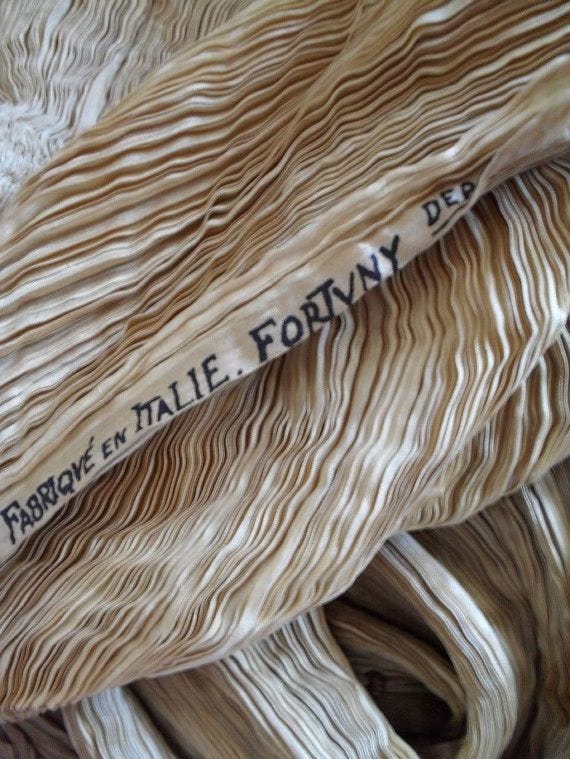

Fortuny was an original figure in twentieth-century fashion. The simplicity of shape, colour and texture in his clothing and the freedom from extraneous detail resulted in a unique style.
Tina Chow was an avid collector and lover of his work.
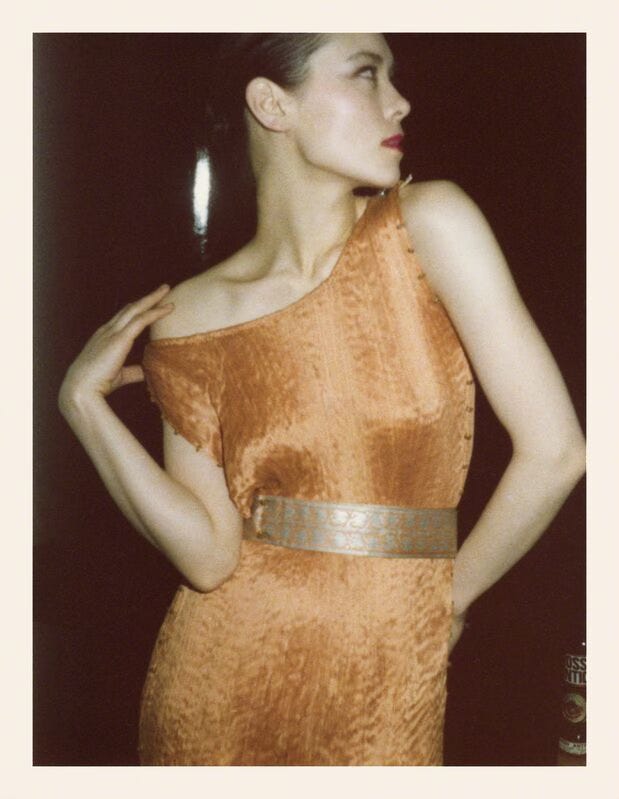
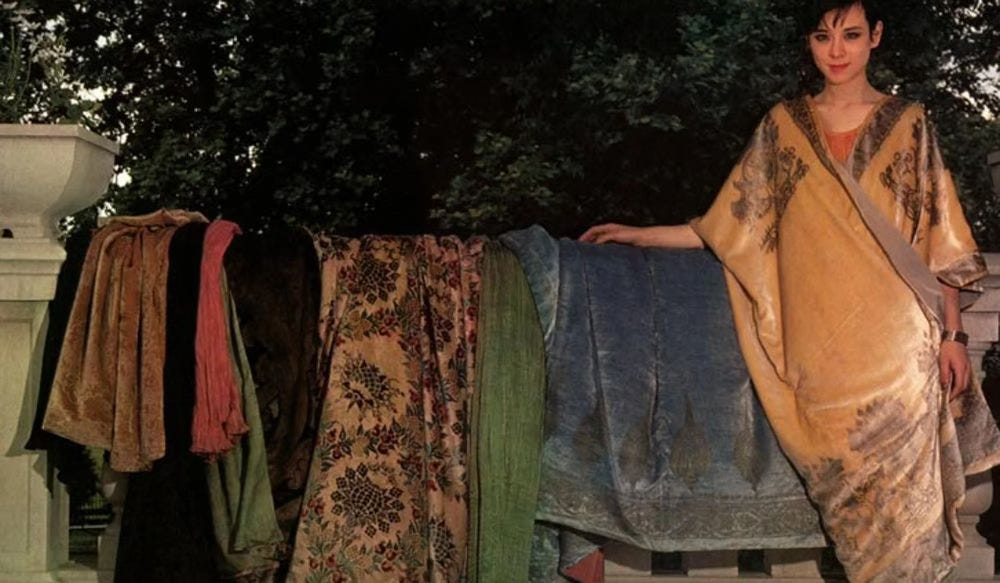
Some of the fashions of the contemporary Japanese designers of the 80s, such as Issey Miyake, and Yohji Yamamoto, relate back to his work.
Nowdays, we can shop the designs in his shops in Paris, Venice and Munich. Not only clothes but also, lamps (obsessed with this and this) and house accessories. My favourite piece that I own is the silk scarf and I cant wait to get another color or material, like velvet.
xx
Soooo good. Such a legend